
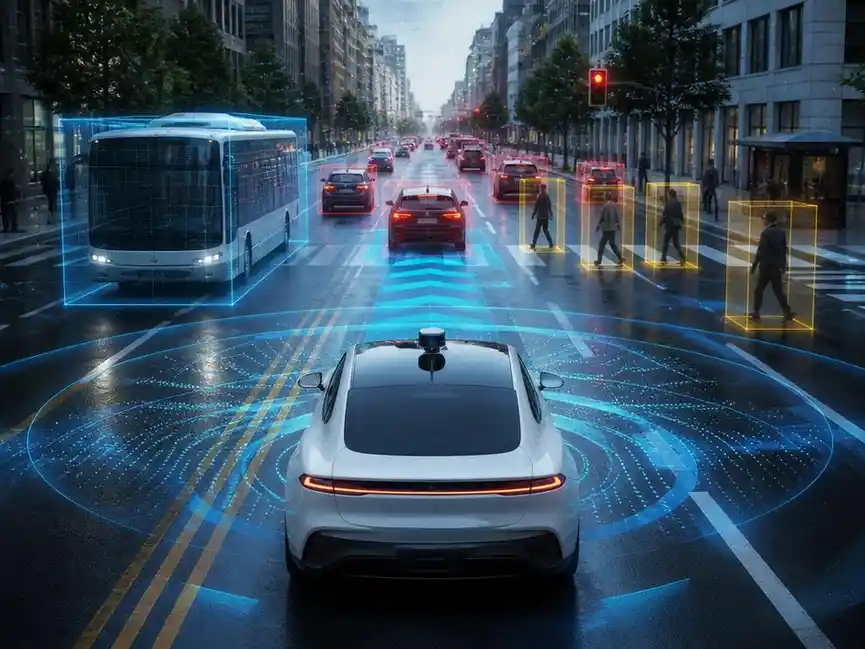
Modern safety systems increasingly rely on advanced technologies to prevent accidents before they occur. The rapid rise of collision detection artificial intelligence has transformed how machines perceive their surroundings, offering unprecedented levels of spatial awareness. This technology allows software to predict potential impacts, enabling automated systems to take swift evasive actions.
As industries embrace automation, understanding the underlying mechanisms of these smart safety systems becomes crucial. From self-driving cars navigating busy urban streets to robotic arms operating on factory floors, the applications are expanding exponentially. Let us explore how these cutting-edge algorithmic models are redefining physical security and operational efficiency.
Understanding smart safety systems in modern environments
Traditional safety mechanisms rely on simple physical bumpers or basic proximity sensors to detect nearby objects. However, these older solutions lack the cognitive ability to anticipate complex moving trajectories in dynamic environments. Modern computer vision algorithms analyze multiple environmental variables simultaneously, creating a highly detailed spatial map that updates dynamically every millisecond.
By integrating advanced neural networks, these systems can distinguish between different types of obstacles. For instance, a vehicle can identify a pedestrian, a cyclist, or a static lamppost and adjust its response accordingly. This contextual awareness ensures that protective measures are highly specific and remarkably effective under pressure.
Furthermore, the continuous feedback loop of machine learning models allows systems to learn from past experiences. This ongoing adaptation refines safety protocols over time, making future decisions much faster and more accurate. Consequently, industries can reduce operational risks while maintaining high speeds and maximizing productivity levels daily.
💡 Key Takeaways: Next-Gen Safety
- Predictive Capability: Algorithms anticipate impacts long before physical contact occurs.
- Environmental Adaptability: Systems adjust their sensitivity based on active weather and lighting.
- Continuous Optimization: Machine learning ensures the safety parameters evolve with new visual data.
The evolution of collision detection artificial intelligence
The journey toward fully autonomous safety has been marked by significant algorithmic breakthroughs. Early software versions relied heavily on hand-coded rules, which frequently failed in unpredictable real-world scenarios. Today, the integration of collision detection artificial intelligence represents a massive leap forward, offering adaptive problem-solving capabilities that traditional programming simply could not deliver.
This technological shift has enabled machines to interpret vast amounts of raw sensory information instantly. Instead of relying on a single camera feed, modern setups aggregate inputs from radar, lidar, and ultrasonic sensors. This comprehensive sensory input allows the primary processor to build an accurate, three-dimensional model of the environment.
Consequently, systems can identify subtle hazards that human operators might easily overlook in low-visibility conditions. Whether facing heavy rain, thick fog, or complete darkness, these intelligent algorithms maintain consistent vigilance. This relentless monitoring capability forms the foundation of modern high-stakes automation across various global sectors.
From simple sensors to predictive models
Early proximity detection was reactive, triggering emergency brakes only when an impact was virtually unavoidable. Predictive modeling changed this paradigm by introducing temporal analysis, which projects current trajectories into the immediate future. By calculating the mathematical probability of intersecting paths, the system can intervene several seconds before a potential crash occurs.
These proactive adjustments can include slowing down, altering the steering angle, or alerting a human operator. This advanced anticipation significantly lowers the forces involved in any potential incident, saving lives and protecting valuable equipment. The transition to predictive behavior represents the true power of modern software design in safety.
In addition, developers can simulate millions of hazardous scenarios virtually to train these predictive algorithms safely. This virtual testing speeds up the training process without risking actual hardware or human safety in the physical world. As a result, the deployed software arrives with a vast library of pre-learned driving experiences.
Deep learning in real-time collision detection
Deep learning architectures excel at processing highly complex unstructured data, such as video streams or point clouds. Convolutional neural networks analyze every video frame to isolate moving objects from static backgrounds almost instantaneously. This high-speed visual processing is essential for safety systems that operate at highway speeds where milliseconds matter.
To manage this heavy computational load, developers optimize neural networks specifically for low-latency execution on specialized hardware. These optimized algorithms ensure that the critical window between obstacle identification and system reaction remains minimal. This extreme speed is what makes real-time data processing viable in modern life-saving applications.
Furthermore, recurrent neural networks help track objects over time, predicting where a pedestrian will step next. This temporal tracking prevents false alarms caused by temporary visual obstructions or brief sensor glitches. By maintaining a continuous track of moving targets, the safety system ensures smooth, predictable, and reliable intervention protocols.
⚠️ Deep Learning Safety Insight
By analyzing minor alterations in pixel density over sequential video frames, modern neural networks predict sudden trajectory shifts before the human eye can register the motion, preventing catastrophic operational failures.
Key applications of spatial awareness in modern industries
The versatility of intelligent spatial awareness has led to widespread adoption across many commercial sectors. No longer confined to research laboratories, these algorithms actively manage risk in high-stress environments every day. By customizing the sensory inputs and decision logic, developers can adapt the core technology to meet diverse operational needs.
For instance, maritime transport benefits from obstacle avoidance algorithms that navigate crowded shipping lanes and narrow ports. Similarly, massive mining equipment utilizes localized tracking to protect workers operating in deep underground tunnels. This widespread adaptability highlights the universal value of automated safety solutions in the modern global economy.
Furthermore, smaller consumer devices utilize simplified versions of these spatial algorithms to enhance user safety daily. Just as users need to configure device settings to ensure optimal performance, industrial operators must calibrate safety parameters. This calibration ensures that safety limits match the specific physical environment of the machinery.
Revolutionizing autonomous vehicles
Self-driving cars represent the most prominent showcase for advanced spatial algorithms in the consumer market today. These vehicles must continuously interpret chaotic urban environments filled with unpredictable human behavior and changing traffic patterns. By utilizing sensor fusion technology, the onboard computer creates a cohesive representation of the surrounding roadway.
This unified view allows the vehicle to make split-second decisions, such as swerving to avoid a sudden obstacle. These systems also integrate with cruise control to maintain safe following distances automatically based on current speeds. This continuous adaptation dramatically reduces the likelihood of rear-end collisions on busy public highways.
Additionally, the software can communicate with nearby vehicles to coordinate movements and prevent potential conflicts before they arise. This cooperative driving model could eventually eliminate traffic congestion while establishing a virtually crash-free transport network. The social impact of such widespread safety improvements will be truly revolutionary.
As automotive technology evolves, drivers often look for ways to customize their onboard digital systems. Some advanced users search for guides to unlock hidden menus to modify their vehicle’s interior settings. However, the core safety algorithms always remain protected from unauthorized changes to maintain strict regulatory compliance.
| Feature Set | Reactive Safety Systems | Predictive AI Safety |
|---|---|---|
| Decision Latency | High (Post-detection trigger) | Ultra-Low (Real-time projection) |
| Sensor Fusion | Single input channel | Multi-modal integration |
| Target Classification | Binary (Obstacle / Free) | Complex semantic segmentation |
Transforming industrial robotics
In modern manufacturing plants, powerful robotic arms have traditionally been confined to heavy metal safety cages. Today, intelligent proximity systems allow these machines to work safely alongside human employees in shared workspaces. These collaborative robots, or cobots, slow down or stop instantly whenever a human worker enters their immediate operational zone.
This close collaboration improves production efficiency by combining human dexterity with robotic strength and precision. By removing physical barriers, factories can optimize their floor space and create highly flexible manufacturing layouts. This seamless integration of human and machine represents a massive shift in industrial design philosophy.
Furthermore, warehouse automation relies on smart mobile platforms to transport heavy inventory across massive logistics centers. These mobile units utilize local spatial mapping to navigate around sudden spills, fallen boxes, or walking employees. This constant vigilance ensures that high-speed fulfillment operations proceed smoothly without any costly structural damage.
Enhancing drone navigation
Unmanned aerial vehicles must navigate complex three-dimensional spaces filled with trees, utility lines, and other aircraft. Lightweight onboard spatial processors allow drones to map obstacles in real time without relying on constant ground control communication. This autonomous capability is essential for long-range delivery missions and automated search and rescue operations.
By processing visual data locally, the drone can instantly recalculate its flight path to bypass unexpected obstacles safely. This fast local response is crucial when flying in gusty winds or challenging mountainous terrain. As a result, commercial drone fleets can operate with a high degree of independence and minimal human supervision.
Moreover, these aerial safety systems are opening up new possibilities for agricultural monitoring and environmental mapping. Drones can fly close to crop canopies or forest structures without any risk of crashing into branches. This close-range data collection provides researchers with high-resolution imagery that was previously impossible to acquire safely.
✅ Industrial Advantages
Implementing smart collision systems in warehouses completely eliminates worker injury risks while accelerating shipping throughput by up to forty percent annually through fluid navigation pathing.
Crucial challenges facing intelligent collision systems today
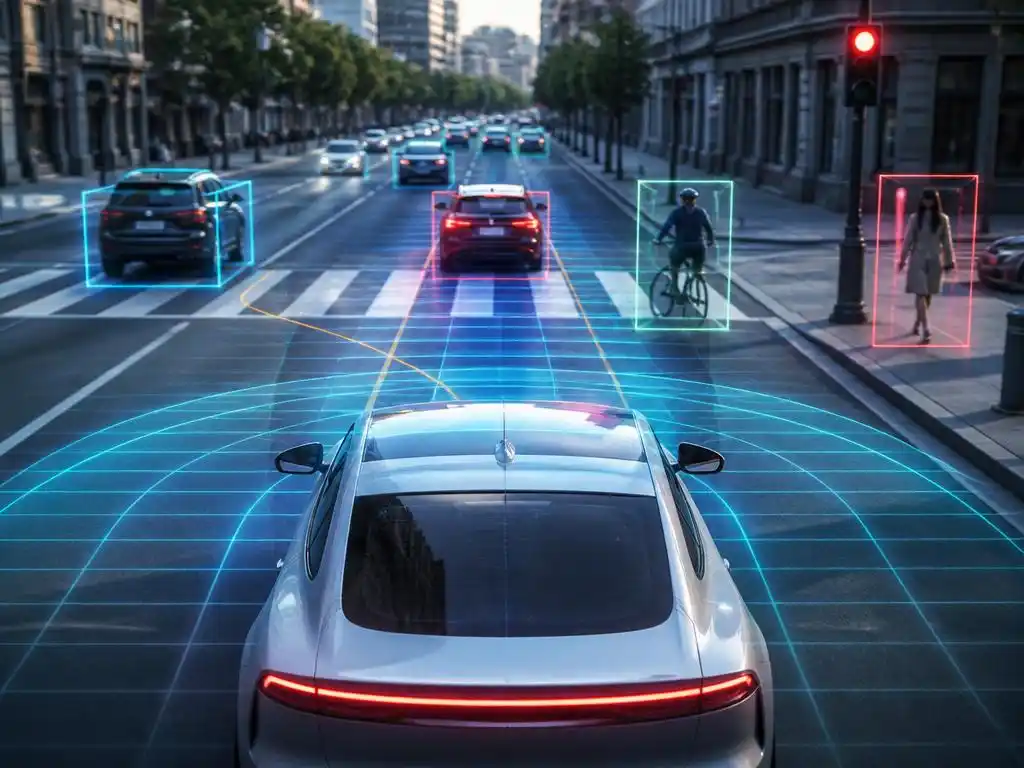
Despite rapid technological progress, several significant challenges still prevent the universal adoption of these safety systems. One primary obstacle is the high computational power required to process massive sensory datasets in real time. Deploying heavy processing units on small, battery-powered devices often limits operational runtimes and increases overall manufacturing costs.
Another major concern is the reliability of sensor performance in extreme weather conditions. Heavy snowfall, dense mud, or blinding sunlight can temporarily blind optical cameras and laser sensors. Developing algorithmic models that can accurately interpret corrupted or incomplete sensor data remains an active area of academic research today.
There are also complex ethical and legal questions regarding accountability when an automated system fails to prevent an accident. Determining whether the software developer, the hardware manufacturer, or the operator is responsible requires new legal frameworks. These societal discussions must progress alongside technological development to ensure public trust and regulatory clarity.
Solving these complex problems is much like solving highly intricate modern puzzle challenges that require creative lateral thinking. Just as the modern puzzle challenges of today test our analytical limits, engineering safer algorithms tests the boundaries of computer science. Overcoming these hurdles will require sustained collaboration across various scientific disciplines.
Promising future trends in predictive algorithmic safety
The future of automated safety points toward deeper system integration and faster localized decision-making. As hardware components become smaller and more energy-efficient, advanced spatial algorithms will find their way into everyday consumer appliances. This democratization of safety technology will establish a new baseline of accident prevention across various global markets.
Additionally, the rise of standardized communication protocols will allow different machines to share safety data instantly. A car detecting an icy patch on the road can immediately alert following vehicles miles behind it. This collective intelligence model will transform individual safety systems into cooperative, regional protection networks.
Furthermore, developers are exploring the use of synthetic training data generated by advanced physics engines. This approach allows software to experience extremely rare accident scenarios that are impossible to replicate in reality. By mastering these edge cases virtually, the software becomes highly resilient against unexpected real-world events.
🚀 Emerging Trend: Edge AI Integration
By shifting computation from remote cloud servers to local edge chips, machines perform complex spatial calculations in fractions of a millisecond, completely bypassing internet lag constraints.
The integration of edge computing
Processing raw sensor data on centralized cloud servers introduces latency that can be dangerous in critical situations. Edge computing solves this problem by performing all spatial calculations directly on the physical machine itself. This localized processing ensures that the collision avoidance system can react within microseconds, independent of internet connectivity.
By eliminating dependency on external networks, edge-enabled devices maintain consistent safety performance even in remote areas. This reliability is essential for agricultural machinery operating in deep rural zones or ships navigating open oceans. Keeping the decision-making loop entirely local represents a major milestone in reliable safety engineering.
Moreover, localized processing protects user privacy by ensuring that sensitive environmental video feeds are never uploaded online. This data security is increasingly important to consumers and businesses concerned about digital surveillance. By design, edge computing aligns operational safety with modern data protection standards seamlessly.
Just as digital agencies must optimize web visibility to connect with local clients, hardware developers must optimize localized processing to ensure safety. This balance of efficiency and local optimization is fundamental to successful digital deployment in any technical industry today.
Next-generation sensor fusion
Future systems will rely on next-generation sensor fusion techniques that merge electromagnetic, acoustic, and visual data streams. This multi-layered sensory approach ensures that the tracking software retains a clear picture of the environment at all times. If one sensor fails, other modalities instantly compensate to prevent any temporary loss of visibility.
These advanced fusion models also incorporate machine learning to dynamically weight the reliability of different sensor inputs. For example, during a sudden rainstorm, the system will naturally rely more on radar data than optical cameras. This intelligent adaptability ensures consistent performance across rapidly changing environmental conditions.
Furthermore, the miniaturization of these multi-sensor arrays makes them highly practical for small-scale applications. From wearable safety vests for construction workers to lightweight consumer drones, everyone can benefit from advanced spatial protection. This widespread accessibility will continue to drive down accident rates across all sectors.
Ultimately, these advancements in sensor fusion will lead to highly robust, fully autonomous navigation systems. These networks will seamlessly manage complex movement patterns in both highly structured and completely chaotic environments. The resulting improvements in safety, efficiency, and productivity will reshape how society interacts with machinery.
A safer future powered by highly intelligent smart systems
The rapid deployment of automated safety software is fundamentally changing our relationship with technology. By taking over the tedious task of continuous vigilance, these intelligent systems protect us from human errors. As these models continue to mature, they will become quiet, invisible guardians of our daily lives.
From reducing highway fatalities to protecting factory workers, the positive impacts of these innovations are already visible. The ongoing collaboration between software developers, hardware engineers, and regulatory bodies will ensure these systems remain safe and effective. This cooperative approach is essential for building a future where accidents become a rare exception.
As we look ahead, the potential of intelligent spatial awareness systems seems virtually limitless. Embracing these advanced computational tools will allow us to build a safer, more efficient, and highly connected world. The journey toward total operational safety is well underway, guided by the power of modern intelligent software.
