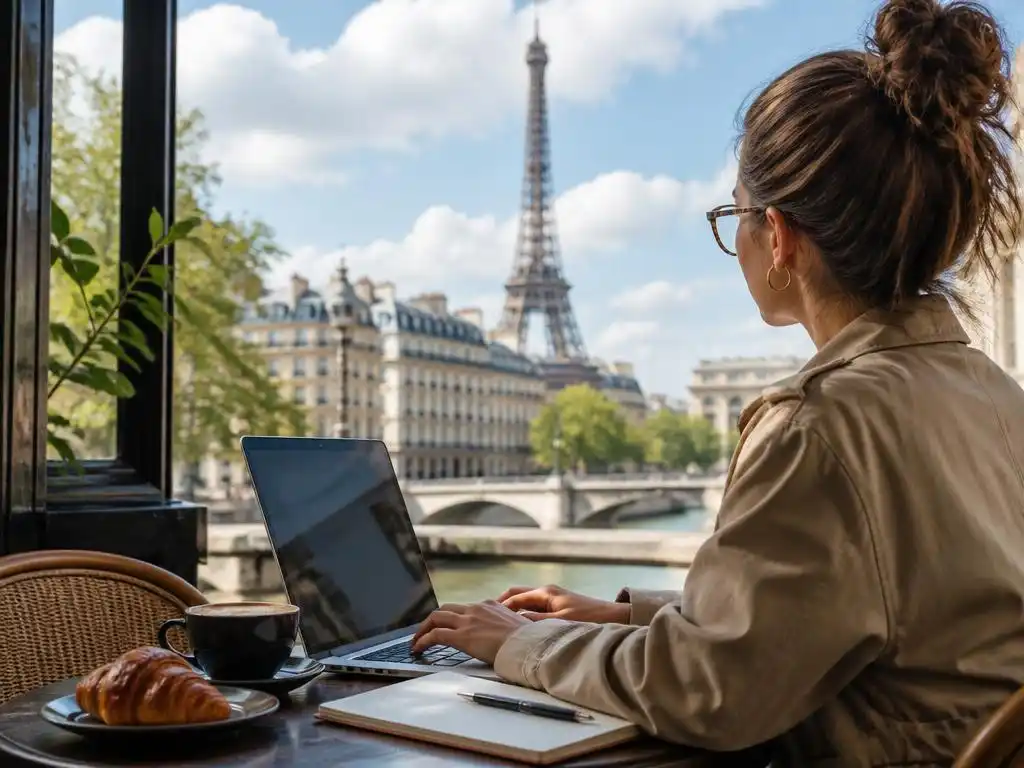
Dreaming of working from a Parisian café often leads remote workers to search for a french digital nomad visa to legalise their stay. While France does not offer a specific visa category under this exact name, several pathways allow global freelancers to live in this beautiful country legally.
Understanding these legal alternatives is essential for avoiding administrative hurdles while establishing your remote office. This comprehensive guide details the practical pathways, financial requirements, and tax obligations to help you transition seamlessly to your new life in France.
ℹ️ Important Visa Clarification
While France lacks a single dedicated program for remote work, you can easily use alternative long-stay visas to achieve the exact same lifestyle legally.
Understanding the reality of remote work in France
Many international professionals assume that moving to Europe as a remote worker is a straightforward process. However, the administrative landscape in France requires a deeper understanding of local immigration laws before packing your bags. You must align your professional activity with the existing legal frameworks instead of searching for a non-existent permit.
The French administration values clarity, structure, and pre-established financial security for all incoming expatriates. Navigating these requirements demands careful preparation, extensive documentation, and a realistic expectation of processing timelines. By selecting the correct pathway, you can establish a stable legal presence while enjoying the unique lifestyle France offers.
The visitor visa pathway for remote employees
The long-term visitor visa represents one of the most accessible routes for remote employees. This specific visa allows you to reside in France for up to one year without engaging in any local economic activity. It is perfect for employees who are fully supported by companies located outside French territory.
To secure this visa, applicants must sign a solemn declaration promising not to work within the local French market. You must prove a stable monthly income that meets or exceeds the French minimum wage. This pathway offers an excellent opportunity to experience the culture while maintaining your current remote job.
Additionally, you will need to provide proof of suitable accommodation in France, such as a lease agreement or a long-term rental contract. Consulates also require comprehensive health coverage that spans the entire duration of your stay. This ensures you will not become a financial burden on the national social security system.
The liberal profession visa for freelancers
For self-employed individuals and freelancers, the independent professional pathway is the most viable alternative. This visa is designed for professionals who wish to establish a business or practice their craft independently in France. It allows you to legally invoice clients globally while living in one of the beautiful French regions.
Securing this visa requires presenting a viable business plan that demonstrates financial sustainability and benefits the economy. You must prove that your projected income will at least equal the national minimum wage. The application process involves rigorous scrutiny of your professional credentials, past business experience, and financial reserves.
Freelancers should also prepare a professional portfolio highlighting previous successful client projects and active contracts. When settling into your new lifestyle, optimizing your workday is crucial, which is why learning about managing daily routines can help maintain peak productivity during transitions. Balancing your workload with cultural exploration ensures long-term remote success.
📋 Liberal Profession Key Requirements
- Proof of academic degrees or equivalent professional certifications.
- A detailed, realistic business plan written in French.
- Bank statements showing sufficient capital to launch your business.
- A clean official criminal record check from your home country.
Financial thresholds for independent workers
Financial viability is the cornerstone of any successful visa application in France. The authorities want to see that your business model can generate a consistent, livable wage. For independent contractors, this means demonstrating a minimum monthly income equivalent to the net French minimum wage after business expenses.
It is wise to accumulate substantial savings before initiating your application to cover initial relocation costs. These reserves act as a financial buffer during the initial months when your business is settling. Providing clear bank statements and tax returns from previous years will significantly strengthen your case.
Navigating the French business registration
Once your professional visa is approved and you arrive, registering your business activity is your primary administrative task. Most digital nomads choose the auto-entrepreneur status because of its simplified accounting rules and tax structures. This regime allows you to pay social contributions based directly on your declared monthly turnover.
Navigating this registration system requires dealing with several local government bodies and online portals. Seeking advice from expatriate communities or hiring a local accountant can save you valuable time. They can guide you through the initial setup, ensuring your business complies fully with French commercial regulations.
Tax implications for remote workers in France
Understanding your tax residency status is critical when planning a long-term stay in France. If you spend more than one hundred and eighty-three days in the country, you are generally considered a tax resident. This status obligates you to declare your worldwide income to the local tax authorities.
France has established double taxation treaties with numerous countries to prevent expats from paying taxes twice. However, the tax system can be complex, with various brackets and social security contributions to consider. It is highly recommended to consult a cross-border tax specialist to optimize your personal tax liabilities.
For business owners looking to scale operations globally from France, utilizing efficient business tools becomes essential. Accessing modern talent acquisition methods can assist in hiring overseas remote talent to support your growing freelance business. Structuring your business properly from the start ensures long-term compliance and financial growth.
| Visa Pathway | Ideal Candidate | Work Authorization | Key Requirement |
|---|---|---|---|
| Long-Term Visitor | Remote Employees | No local market work | Passive income proof |
| Liberal Profession | Freelancers & Business Owners | Full self-employment | Detailed business plan |
Health insurance and social security integration
Access to healthcare is another crucial factor for any international remote worker settling in France. Having adequate health insurance coverage is not just a visa requirement; it is a fundamental necessity for peace of mind. The French healthcare system is highly regarded globally for its quality and accessibility.
Under certain visas, you can eventually register for the national health insurance system, known as Puma. This system provides reimbursement for medical expenses, doctor visits, and prescription medications. Until you are integrated, maintaining a comprehensive private expat insurance policy is mandatory to cover any unexpected emergencies.
Practical steps for a successful application

The journey to securing your visa begins several months before your intended departure date. You must gather, translate, and legalize numerous documents, including birth certificates, bank statements, and professional contracts. Organizing your dossier meticulously is the key to preventing delays during your consulate appointment.
You will need to book an appointment at the nearest French consulate or visa processing center. During this interview, you must clearly explain your remote work plans and present your financial guarantees. Being polite, professional, and well-prepared will create a favorable impression on the visa officers reviewing your file.
Once you arrive in France, you must validate your visa online within the first three months. This step is crucial as it activates your residency rights and allows you to travel freely. Failing to complete this registration can invalidate your visa and lead to legal complications.
Equipping your remote workspace in France
Setting up an efficient home office is vital for maintaining productivity while living abroad. You will need reliable high-speed internet, which is widely available in most French cities and towns. Investing in quality equipment and ergonomic furniture will help you work comfortably and maintain high professional standards.
For professionals in specialized fields, such as digital healthcare or remote consultation, securing advanced software is a priority. Finding modern software options designed for specific industries can streamline your daily operations immensely. Ensuring you have the right digital tools makes working remotely from France incredibly seamless.
Choosing the right French region for remote work
Selecting where to live is one of the most exciting aspects of your relocation journey. Paris offers unparalleled cultural experiences, but it comes with a high cost of living and expensive rent. Cities like Lyon, Bordeaux, or Marseille provide a fantastic balance of vibrant culture and affordable housing.
If you prefer a quieter lifestyle, the French countryside and coastal regions offer peaceful environments. Many smaller towns now have active coworking spaces and excellent digital infrastructure to support remote workers. Consider your budget, climate preferences, and lifestyle goals before making your final relocation decision.
💡 Core Application Takeaways
Ensure success by focusing on these foundational steps during your planning phase:
- Select the Visitor pathway if you have stable foreign payroll employment.
- Select the Liberal Profession route if you run an active freelancing business.
- Prepare for full tax liability once you exceed the 183-day annual threshold.
Integrating into the local French community
Living in France is about more than just working; it is about immersing yourself in the culture. Learning the French language is the most effective way to build meaningful connections with your neighbors. Even basic conversational skills will be highly appreciated and will make your daily errands much smoother.
Joining local sports clubs, attending community events, and visiting local markets are great ways to integrate. Engaging with other expatriates can also provide valuable support and practical advice during your initial adjustment phase. Embracing the local lifestyle will enrich your remote working journey and make it unforgettable.
Future outlook for remote workers in France
The global shift towards flexible working arrangements continues to influence immigration policies worldwide. While France maintains its traditional visa categories, the administrative processes are gradually becoming more digitalized. This ongoing modernization makes it easier for international professionals to submit applications and manage residency renewals.
Staying informed about changing immigration policies and tax laws is crucial for long-term residency. By remaining adaptable and legally compliant, you can enjoy a stable and rewarding career in France. The opportunity to live in this culturally rich country is well worth the effort of navigating the visa process.
Understanding French rental agreements
Securing accommodation is a vital step for your visa approval process. Landlords in France often request a local guarantor or extensive proof of earnings. Using specialized international rental platforms designed for expats can help bypass some of these challenging requirements during your initial stay.
Be prepared to sign a standard rental contract, known locally as a bail. This legal document outlines your monthly rent, security deposit, and notice periods for moving out. Understanding these terms ensures you protect your tenant rights and avoid unnecessary disputes with your landlord.
Navigating banking and currency exchange
Opening a local bank account is highly beneficial for managing daily expenses in France. Many traditional French banks require residency proof, which can be tricky when you first arrive. Fortunately, digital banking alternatives offer a faster, more accessible setup process for incoming global nomads.
Having a European bank account allows you to pay utilities and receive payments seamlessly. It also helps you avoid expensive foreign transaction fees and unfavorable exchange rates from home banks. Utilizing these digital financial platforms makes your transition much smoother and highly cost-effective.
Managing language barriers in French bureaucracy
Facing the administrative system can be daunting if you do not speak French. Most official documents, visa portals, and tax forms are strictly in the local language. Hiring a professional translator or consultant can make a significant difference in the speed of your applications.
Even learning basic bureaucratic terms will boost your confidence during your appointments. Words like « justificatif » or « titre de séjour » will appear constantly in your communications with officials. Being proactive about language learning shows respect and helps you navigate administrative pathways with greater ease.
Co-working spaces and digital nomad communities
Finding a dedicated workspace is essential for maintaining a healthy work-life balance abroad. France has seen a massive surge in modern co-working spaces across all major cities. These spaces offer reliable internet, meeting rooms, and opportunities to network with other professionals.
Joining local digital communities allows you to share experiences, tips, and social events. These networks provide a sense of belonging and support, reducing feelings of isolation. Engaging with fellow remote workers can also lead to exciting professional collaborations and lifelong friendships.
Internet speed and infrastructure in France
High-speed internet is readily available throughout France, making remote work exceptionally efficient. Most urban areas are connected to fiber-optic networks, ensuring fast upload and download speeds. Even rural areas are rapidly improving their connectivity through government-backed digital expansion initiatives.
Before renting an apartment, always ask the landlord for an internet speed test. This precaution ensures you can handle video calls and large file transfers without interruption. Having a backup mobile hotspot is also a smart strategy for securing constant, reliable network access.
Cost of living comparison for remote workers
The cost of living in France varies significantly depending on your chosen location. Paris is notoriously expensive, comparable to major global hubs like London or New York. However, regional capitals offer a highly attractive lifestyle at a fraction of the cost.
Groceries, public transport, and health services are generally affordable and of high quality. Dining out and entertainment can fit easily into your budget with careful financial planning. Understanding these local costs helps you budget effectively and enjoy your French adventure without financial stress.
💡 Pro-Tip for Administrative Success
Always keep physical and digital copies of every single document. The French administrative system is highly thorough and often requests paper documents during in-person appointments!
