
Embarking on a journey toward an electrical technology associate degree opens diverse doors in the modern industrial landscape. As power systems evolve toward sustainable energy and smart grid integration, skilled technicians are in high demand to maintain complex infrastructures. This academic credential acts as a foundational bridge between theoretical physics and practical application, providing students with the technical dexterity required to excel in high-voltage environments. By choosing this educational path, you position yourself at the forefront of a shifting professional sector where expertise in circuit design and systems maintenance is highly valued by global employers.
Beyond technical proficiency, this degree program fosters critical thinking and rapid problem-solving capabilities necessary for high-stakes technical troubleshooting. Students learn to interpret blueprints, navigate electrical codes, and manage automated control systems with precision. This comprehensive preparation ensures that graduates enter the workforce not merely as trainees, but as competent professionals capable of managing immediate challenges. As technology continues to permeate every facet of modern industry, the skills acquired during your studies will serve as a resilient asset, allowing you to adapt to new tools, digital monitoring systems, and the shifting energy demands of the twenty-first century.
Technical curriculum and core competencies
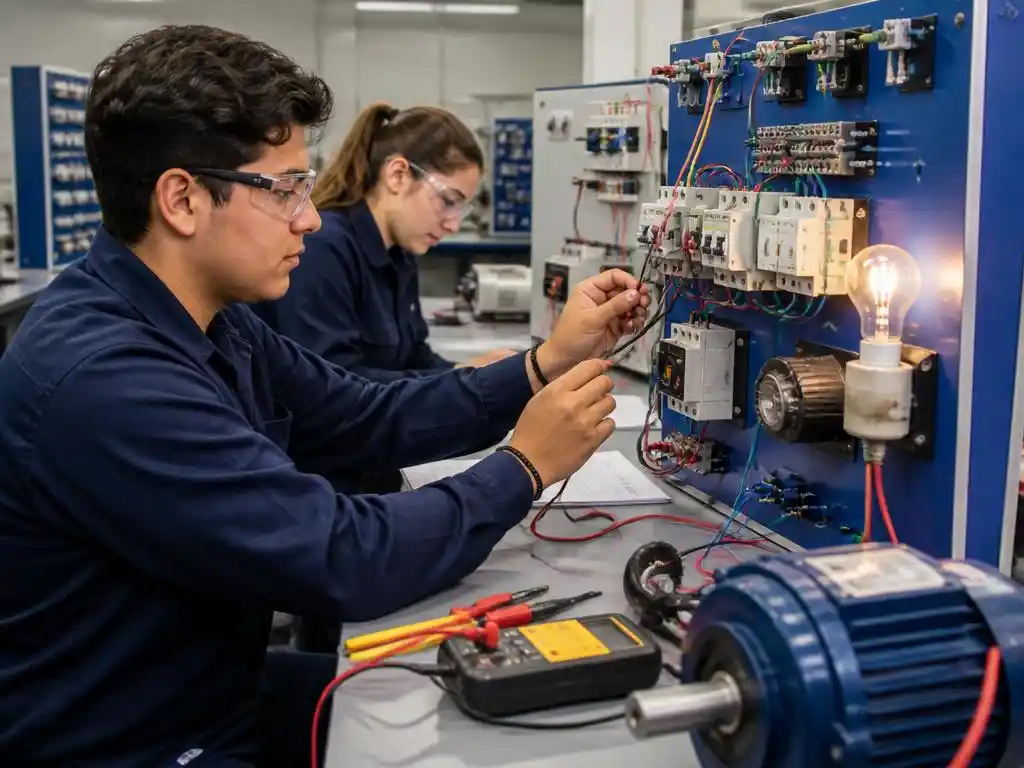
The core curriculum focuses heavily on hands-on lab experiences, covering everything from fundamental circuit analysis to advanced programmable logic controllers. Students spend significant time mastering the use of digital multimeters, oscilloscopes, and various diagnostic software tools. This rigorous exposure to real-world hardware prepares individuals to handle auto electrical issues or commercial facility maintenance with equal confidence and accuracy. By bridging the gap between classroom theory and practical lab exercises, the program ensures graduates can safely manage power distribution, instrumentation, and industrial safety standards from their very first day on the job site.
💡 Essential Skill Sets
- ✅ Advanced circuit board diagnostics and PCB repair.
- ✅ Integration of smart automation and industrial robotics.
- ✅ Regulatory compliance and electrical code knowledge.
- ✅ Preventive maintenance strategies for facility longevity.
Furthermore, the curriculum emphasizes the importance of safety protocols in high-voltage settings. Understanding the National Electrical Code is not just an academic requirement but a life-saving necessity that defines a professional career. Instructors often use simulated scenarios to test students’ reactions to unexpected surges or equipment failures. This high-pressure training environment is designed to cultivate a mindset of safety-first operation, which is a critical differentiator for top-tier employers. Mastering these competencies early on allows you to build a reputation as a reliable technician who prioritizes operational safety and efficiency in all complex electrical environments.
Leveraging your electrical technology associate degree
Once you graduate, the transition into the workforce involves selecting the right niche to specialize in. Many professionals find that applying their skills to hospitality digital signage installations offers a unique mix of networking and electrical installation duties. This intersection of IT and traditional hardware is a growing field that rewards those with a dual understanding of power distribution and digital communication protocols. By diversifying your interests early, you become a versatile candidate capable of navigating both legacy electrical systems and the modern, connected hardware that businesses rely upon to maintain their customer-facing operations effectively.
The greatest advantage of a technical degree is not just the knowledge of wires and currents, but the systematic approach to solving complex problems in a world governed by electricity.
For those looking to expand their professional reach, understanding the broader market dynamics is equally important as technical skill. You might consider how professional advancement strategies play into your long-term success. While electrical work is inherently technical, the ability to communicate with project managers and clients is what elevates a technician to a lead role. Developing soft skills, such as clear reporting and project timeline management, will significantly accelerate your promotion path. This holistic professional development ensures you are not just capable of fixing problems, but also managing the lifecycle of large-scale electrical projects with ease.
Can this degree lead to specialized niche industries?

Specialization is the key to achieving a high salary potential in the electrical trades. With a solid educational background, you could pivot toward renewable energy sectors, such as solar array installation or wind turbine maintenance. Alternatively, you might find success in the niche world of audio-visual systems, where you could learn fixing sound issues in high-end theater environments. These specialized roles require a deep understanding of signal processing and grounding, skills that are directly bolstered by the rigorous coursework you completed during your associate degree studies in electrical technology and systems.
🚀 Career Growth Tips
Always stay updated on local certifications. Your technical certification path is a living document; as industry standards change, so should your specific expertise. Participate in local workshops and trade association meetings to keep your professional network active and informed about the latest technological shifts in your local market.
The demand for specialized technicians is particularly high in the commercial sector, where downtime can result in massive financial losses. Being the technician who understands the nuances of automated building systems makes you indispensable to property managers. When you focus on continuous learning, you protect your career against obsolescence. Even if you choose to transition into broader roles, such as project scaling support for emerging tech companies, your background in electrical systems provides a logical, analytical framework that most other professionals lack in high-tech corporate environments.
Future-proofing your professional journey
Future-proofing your career involves more than just keeping up with new tools; it requires a proactive approach to industry trends. As the global energy transition accelerates, having a degree that covers both traditional power and modern control systems is an enormous advantage. Keep your eyes on automation, AI-driven diagnostics, and remote monitoring. These are the tools that will define the next decade of electrical technology. By mastering these early, you secure your position as a forward-thinking expert who can navigate the complexities of modern infrastructure development with confidence, precision, and efficiency in every project you undertake.
| Skill Level | Potential Focus |
|---|---|
| Junior Tech | Maintenance & Repairs |
| Mid-Level | Automation & Controls |
| Senior/Lead | System Design & Management |
Ultimately, your success depends on how you apply your foundational knowledge. A degree is merely the starting point. The real growth happens in the field, through consistent practice and a willingness to tackle the most difficult tasks. Whether you are dealing with a complex wiring issue or helping a client optimize their digital infrastructure, your dedication to excellence will set you apart. By combining your hands-on experience with a commitment to ongoing learning, you will build a sustainable, highly rewarding career that keeps pace with the rapid innovations defining the future of electrical technology around the world.

Commentaires désactivés