
Embarking on an electrical technology associate degree opens doors to a dynamic and high-demand career path within the modern industrial landscape. Students gain essential technical expertise by balancing complex theoretical physics with practical hands-on laboratory experiences. This foundational education prepares graduates to handle everything from residential wiring systems to sophisticated automated industrial machinery. As technology continues to evolve rapidly, professionals holding this credential find themselves at the center of innovation. Deciding to pursue this specialized academic route ensures you develop the critical problem-solving capabilities required to navigate today’s sophisticated electrical infrastructure safely and effectively.
Beyond technical proficiency, this program fosters the analytical mindset necessary for diagnosing multifaceted system failures in various commercial environments. Whether you aim to become a licensed electrician or an automation specialist, the curriculum provides a robust framework for long-term professional growth. You will master circuit design, motor controls, and programmable logic controllers while adhering to strict safety protocols. By choosing this educational journey, you position yourself as a vital asset in a workforce that perpetually demands skilled, certified talent. Let us explore the diverse opportunities and long-term career benefits waiting for those who commit to this technical field.
Core curriculum and technical training
The academic structure of an electrical technology associate degree is carefully designed to build knowledge layer by layer. Initially, students engage with basic circuit theory, understanding voltage, resistance, and current flow. These concepts form the bedrock for advanced studies in power systems and electrical code compliance, which are vital for industry certification and regulatory adherence.
Hands-on training often takes place in simulated environments that mimic real-world challenges. From automotive electrical diagnostics to industrial motor maintenance, the diversity of lab work ensures graduates are ready for employment. This blend of classroom theory and practical application is what differentiates these degrees from simple vocational certificates or basic trade school programs.
Career opportunities for graduates
Once you complete your degree, the professional landscape expands significantly across multiple sectors. Graduates often find themselves working in manufacturing plants, commercial construction projects, or specialized renewable energy firms. The versatility of your training allows for seamless transitions between these roles, ensuring that your career remains both challenging and intellectually stimulating throughout your life.
Entry-level roles often involve installation and preventive maintenance duties under the supervision of master technicians. However, with experience, many individuals move into project management, system design, or specialized consulting roles. This upward mobility highlights the economic value of your initial investment in formal education and long-term technical training efforts.
💡 Essential skills for the field
- Mastery of complex circuit analysis and blueprints
- Advanced knowledge of digital hardware systems
- Rigorous adherence to international safety regulations
- Effective communication for team project management
The role of automation in modern industry
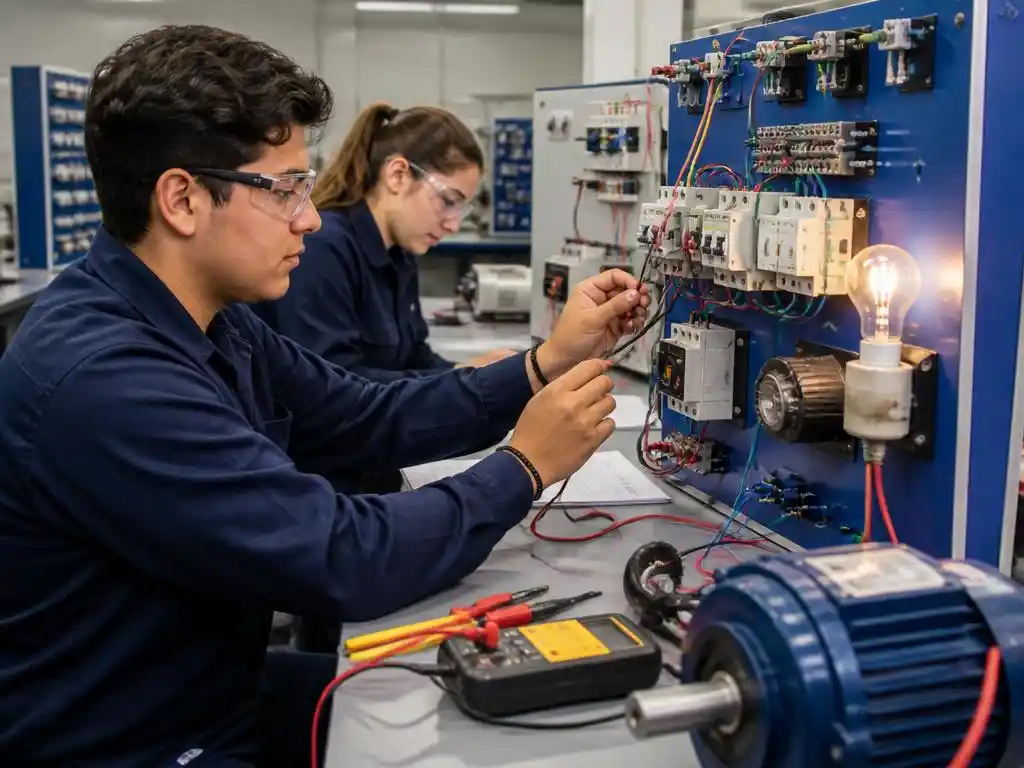
The integration of automation technology is fundamentally changing how factories operate, requiring technicians with advanced skill sets. An electrical technology associate degree covers the fundamentals of robotics and automated assembly lines. Understanding how these systems communicate and function under pressure is an essential requirement for any modern technician entering the heavy industry sector.
Technicians who can troubleshoot PLC software and hardware are highly sought after by global corporations. As businesses scale their operational capacity, they rely on skilled professionals to maintain continuous uptime. Consequently, your ability to handle sophisticated control logic significantly boosts your long-term earning potential and stability in the competitive job market.
Advantages of an associate degree
Choosing an associate degree over a short-term certification provides a broader academic foundation. You will study mathematics, communications, and business principles alongside core technical modules. This comprehensive approach ensures that you are not just a laborer but a well-rounded professional capable of leading teams and managing complex technical operations effectively.
Furthermore, many associate degree programs maintain partnerships with industry leaders, providing students with internship opportunities. These placements are often the gateway to full-time employment, allowing you to build professional networks before you even graduate. Practical exposure is just as important as the academic credentials you earn during your two years of study.
Navigating common technical challenges
Every technician will eventually encounter complex equipment failures that require systematic approaches to resolve. Whether you are dealing with audio-visual integration hurdles or high-voltage power distribution issues, the process remains consistent. You must prioritize safety while utilizing diagnostic tools to isolate the exact source of any malfunction within the system architecture.
Documenting these issues is a crucial habit that students develop during their degree program. By learning how to maintain detailed logs and technical reports, you provide future reference points for yourself and your team. This meticulous attention to detail is a hallmark of a high-quality technician who truly understands the gravity of industrial safety.
⚠️ Safety and regulatory compliance

The electrical trade is inherently risky, making safety training the most critical component of any curriculum. You will learn the NFPA 70E standards and other essential protocols required to prevent arc flash incidents and electrical fires. Never underestimate the importance of these lessons as they save lives and prevent catastrophic equipment damage.
Future trends in electrical technology
The rise of green energy is creating an unprecedented demand for technicians skilled in photovoltaic systems and smart grid integration. Pursuing an electrical technology associate degree at this time means you are preparing for a career that aligns with global sustainability goals. Future graduates will be at the forefront of implementing carbon-neutral solutions for residential and commercial infrastructure projects.
As smart homes and intelligent building management systems become the standard, the need for technicians who understand low-voltage integration will grow. This pivot toward intelligent energy management offers a unique niche for those who are willing to continue learning even after they enter the workforce. It is an exciting period to join this professional community.
Continuous professional development
Graduation should be viewed as the beginning, not the end, of your learning process in the electrical field. Technology moves fast, and new standards are published regularly. Keeping your professional certifications active and attending workshops ensures that you remain competitive. The most successful technicians are those who embrace lifelong learning as a core career strategy.
Additionally, networking with peers through trade organizations provides access to shared knowledge and industry insights. You will find that experienced mentors are often willing to share their wisdom regarding common industry pitfalls. Building these relationships early can significantly shorten your learning curve while you gain experience in your chosen specialty or trade path.
Final thoughts on your career path
Investing in your education today serves as the foundation for a prosperous future. By earning this degree, you demonstrate a level of dedication that employers value highly. The skills you acquire during your studies will provide you with the confidence to tackle any project, no matter how complex or demanding it may initially appear to be.
Stay focused on your goals, continue refining your practical abilities, and always prioritize safety in every task you perform. Whether you decide to work in small-scale private contracting or large industrial automation firms, the path ahead is filled with growth and achievement. Congratulations on taking the first step toward a rewarding career.
